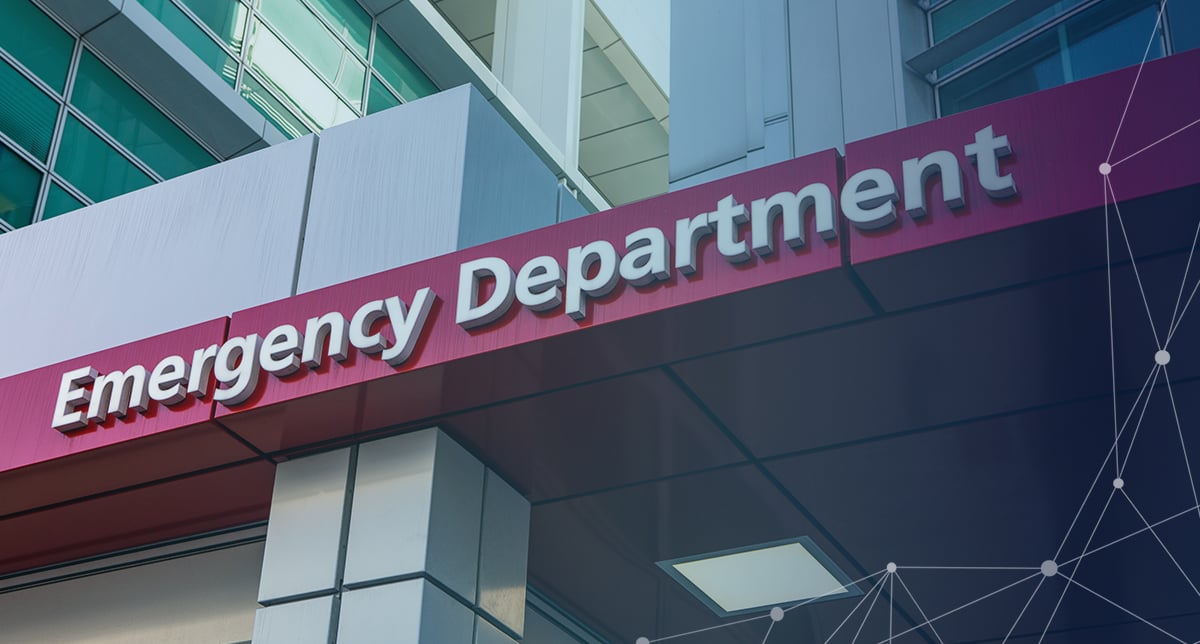
If you’ve been watching a certain hit medical drama set in the emergency department and starring an actor from a popular 1990s-2000s medical drama that was also set in the emergency room, you have seen what happens when a hospital goes analog.
A lot has happened in the decades between these two iconic shows, including a shift from calling it an “ER” to the “ED.” But the biggest change is the ubiquity of electronic health record (EHR) systems and e-prescribing—and more importantly, reliance on them.
When the EHR gets taken offline because of a cyberattack, as it does on season two of HBO’s The Pitt, out come the tools of yore: dry-erase boards, paper prescription pads, and manila folders. And somewhere amid the chaos, there’s bound to be a missed diagnosis, an unflagged allergy, or a dangerous contraindication.
It makes for gripping television, but for hospital and health system leaders, this scenario isn’t fiction.
Beyond the Cyberattack: The Reality of Downtime
While The Pitt focused on the high drama of a cyberattack, the reality is that plenty of mundane events cause EHR downtime, including scheduled maintenance, software failures, and weather-related power or internet outages.
Nearly 96% of healthcare organizations have experienced at least one unplanned EHR outage, with 70% of those events lasting eight hours or more.
And this downtime removes the safety net clinicians have come to rely on, introducing four critical vulnerabilities:
- The information void. Clinicians typically rely on digital feeds to perform medication reconciliation. Even when systems are online, inaccuracies in histories taken manually contribute to 27% of all inpatient provider errors.
- The penmanship problem. When the paper prescription pads come out, so do illegible handwriting and manual transcription mistakes.
- The contraindication blind spot. Automated drug-to-drug and drug-to-allergy interaction alerts disappear when systems are offline. Without these proactive checks, clinicians are forced to rely on their memory or refer to physical manuals, which is difficult in fast-paced environments.
- Compliance and safety risks. Controlled substance prescribing faces legal and regulatory exposure during outages, and digital safeguards against overdoses vanish. When electronic prescribing for controlled substances (EPCS) systems are offline, clinicians lose the ability to verify prescription drug monitoring program (PDMP) data, which is crucial to flagging unsafe opioid levels for patients due to overlapping controlled substance prescriptions or duplicate medications.
“If the utilization of EHRs and related technologies has been shown to make patients unequivocally safer, then wouldn’t it stand to reason that their removal would introduce significant safety concerns?” says DrFirst Chief Medical Officer Colin Banas, M.D., M.H.A., a hospitalist and former Chief Information Officer at VCU Health.
Institutional Knowledge and Generational Gaps
Downtime challenges are compounded by a growing generational shift in the workforce. Many younger doctors, nurses, and pharmacists have never practiced in an analog environment. The Pitt plays this for laughs in a scene where younger medical assistants use felt-tip pens on triplicate forms—oblivious to the fact that what they are writing won’t transfer to the bottom copies.
For those who grew up in the fully digital era, automated alerts, safety checks, and electronic patient records are the only workflows they have known.
“An EHR outage represents a total loss of their essential tools,” Dr. Banas said. “We cannot expect them to fall back on manual processes like paper charting or hand-written prescriptions that they were never trained to use in the first place. I’m old enough to remember these things, but more and more of my fellow providers are not.”
Resilience Is a Patient Safety Strategy, Not Just an IT One
Cybersecurity experts and professional associations agree that downtime plans must specifically address medication management, not just system restoration timelines. The Joint Commission has issued Sentinel Event Alerts, including one on preserving patient safety during cyberattacks. They urge organizations to prioritize pharmacy and medication order entry systems in their contingency plans.
While regulatory bodies like HIPAA and CMS mandate contingency plans, most organizations focus on documentation and billing recovery. True prescribing continuity requires a system that works independently of the EHR.
Don’t Wait for the Next Outage
In the ED, every second counts. As The Pitt illustrates, when screens go dark, risks go up.
The DrFirst Business Continuity solution provides a fully operational prescribing platform that is active 24/7/365, even when your EHR is down. Unlike manual backups, our solution offers:
- Immediate clinical access: A patient roster synced nightly from your EHR via HL7 FHIR and medication history covering over 80% of the insured population.
- Continuous safety: AI-powered clinical decision support and full prescribing ability and EPCS prescribing with PDMP integration.
- Provider familiarity: A mobile prescribing platform clinical staff can use every day and rely on during a system outage.
DrFirst can help ensure your prescribing doesn’t go down with your EHR. Contact us to learn more.