
E-Prescribing
Integrated workflows ease staff burden and satisfy regulatory mandates.

Integrated workflows ease staff burden and satisfy regulatory mandates.

Minimize overprescribing risks with in-workflow visibility into PDMP data.

End-to-end automation speeds access to specialty drugs.

Complete data powered by the largest medication management network in the U.S.

Personalized messages deliver savings, education, and prescription reminders.

Proactively identify high-risk patients to keep them on track with treatments.
Reduce provider burden and transcription errors with AI that infers missing medication details when safe to do so.
Streamline prior authorization processes and improve patient access to complex therapies.
Keep access to prescribing and medication history when your EHR goes down.
It was a bright, sunny morning in April at the Brockton, Mass., facility of Signature Healthcare. The hospital was at capacity, and its electronic health record (EHR) had just gone down. “We were hit,” said Joe Diver, VP and Chief Information Officer.
Immediately pivoting to disaster mode, the team began taking inventory of what systems still worked and which didn’t. It was clear that losing access to e-prescribing was going to be a huge problem, said Diver, who shared his experience recently in a webinar hosted by The Leapfrog Group.
Making that problem worse: Most of Signature’s doctors had never written prescriptions or documented patient data without a computer.
Signature’s team put the DrFirst mobile prescribing platform to work right away. Within two days, most providers were writing electronic prescriptions again, including ones for controlled substances (EPCS), with access to 12 months of patients’ medication history.
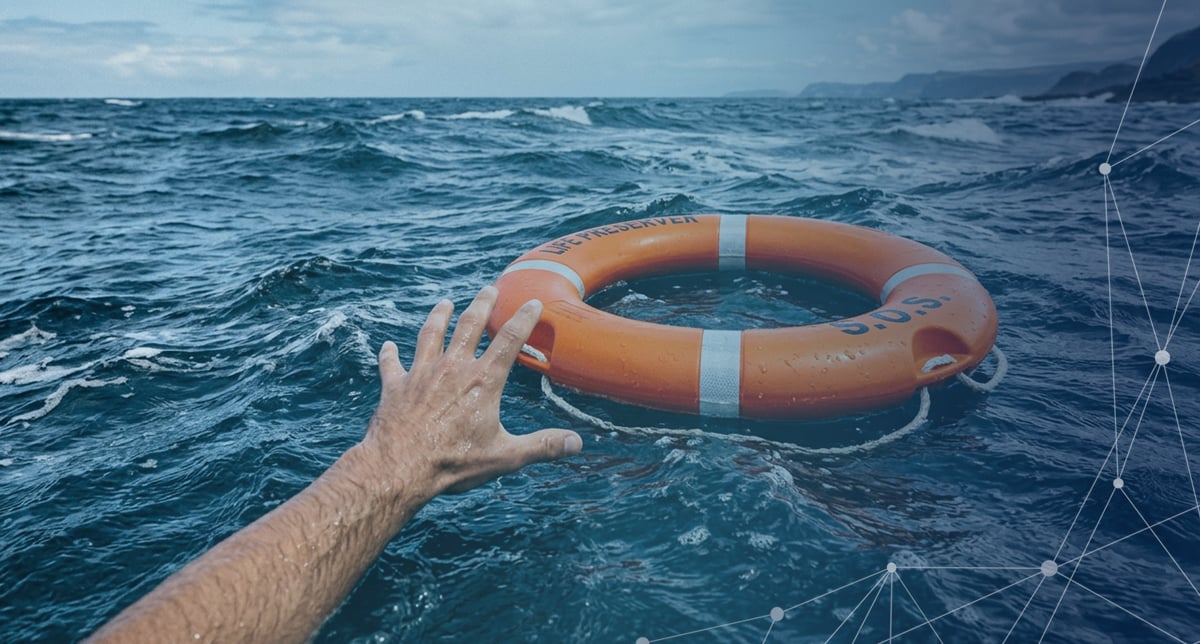
“We were in the deep-sea ocean floating around, and DrFirst threw us a life ring,” Diver said. “Our doctors adopted this so quickly. I’d say it’s the quickest adoption we’ve ever had with technology here at Signature Healthcare.”
All told, 139 prescribers used the solution, with 22,284 scripts processed—2,345 of which were for controlled substances—over the three weeks the network was down.
Michael Thompson, BSN, RN-BCEN, is a practicing emergency department nurse who also helps DrFirst customers navigate e-prescribing challenges as Senior Director of Customer Success. When his hospital lost its EHR for several months last year, he was one of the few clinicians on the floor who knew how to document on paper and he experienced first-hand how the loss of e-prescribing and medication history affected clinicians.
“It was not just that all of the technology went down,” he said. “It was what those technologies did for us.”
An EHR checks for drug interactions and allergies, pulls in prescription drug monitoring program data, and shows what medications a patient is already taking. That all disappears when the EHR goes offline, so clinicians must rely on the patient’s memory.
Colin Banas, M.D., M.H.A., spent 17 years as a hospitalist then CMIO at VCU Health before joining DrFirst as its Chief Medical Officer.
“The literature is pretty robust at this point that EHRs make doctors better and make patients safer,” he said. “Naturally, when you take that away ... patients are inherently less safe.”
Dr. Banas added that the full cost of an outage is impossible to quantify.
DrFirst gave Signature a way to keep e-prescribing, but Diver credits his staff for keeping steady throughout the outage.
“There was not a moment in time when any clinical leaders or frontline nurses or staff were fully agitated,” Diver said. “Everybody just continued delivering care the best that they could under the circumstances.”
That steadiness, unfortunately, came from their experience with a string of challenges. Signature endured through COVID-19 followed by a fire at its Brockton facility. In 2023, the health system took on 15,000 patients after one healthcare organization bankruptcy and dealt with the fallout of more hospital closures in Massachusetts the next year. Then came this year’s cyberattack.
At the end of the three-week outage, when Signature was transitioned back to its EHR, Diver was surprised to note that physicians were reluctant to part with the mobile prescribing tool.
“In the CIO world, there’s always a bug,” Diver said. “But this solution was seamless. This just worked.”
Business continuity for e-prescribing and medication history is now part of the playbook, he added. “It’s part of our operation.”
Get the on-demand webinar to hear what breaks first during downtime, what Signature learned in its debrief, and what questions CIOs, CMOs, and CMIOs should be asking now to keep medication management safe when disaster strikes.
If you’re ready to update your downtime plan, contact us to see how DrFirst can help.